
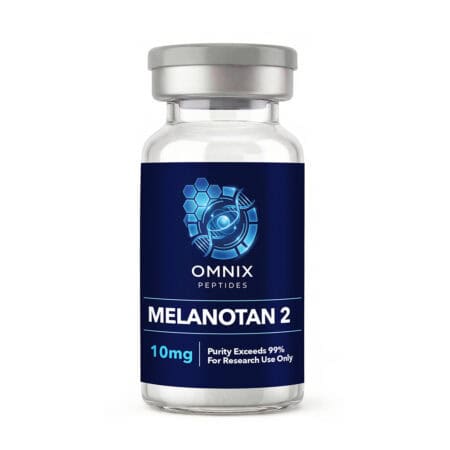
Melanotan II (MT-II; CAS 121062-08-6) is a synthetic cyclic heptapeptide with the sequence Ac-Nle-cyclo[Asp-His-D-Phe-Arg-Trp-Lys]-NH2, designed and synthesized at the University of Arizona by Hadley, Hruby, and colleagues as a superpotent
non-selective melanocortin receptor agonist with activity at the MC1R, MC3R, MC4R, and MC5R receptors. The compound was originally developed as a candidate pharmacological agent for sunless tanning (MC1R-mediated melanogenesis) and erectile dysfunction (MC3R/MC4R-mediated sexual function).
The published peer-reviewed evidence base for melanotan II consists of a Phase 1 amount-ranging study in healthy male volunteers published by Dorr and colleagues in Life Sciences (1996), in which the investigators reported concentration-dependent skin pigmentation with the amount-limiting toxicities of nausea, decreased appetite, and spontaneous penile erections [1], and a small-scale erectile-function study in men with organic erectile dysfunction published by Wessells and colleagues in the International Journal of Impotence Research (2000) [2]. Clinical development of melanotan II was discontinued after the Phase 1 and early Phase 2 program. The successor compound developed for the tanning indication was the structurally distinct linear analog afamelanotide ([Nle4, D-Phe7]-α-MSH), which received FDA approval in 2019 for erythropoietic protoporphyria. Bremelanotide (PT-141), a separate derivative of melanotan II generated by enzymatic cleavage of the parent cyclic peptide, received FDA approval in 2019 for hypoactive sexual desire disorder in premenopausal women.
Melanotan II itself is not approved by the FDA, EMA, or any other regulatory authority for any indication. The FDA has issued consumer warnings regarding melanotan II products marketed for cosmetic tanning, and the U.S. Customs and Border Protection has seized imported melanotan II products in multiple enforcement actions. The peer-reviewed dermatology and emergency-medicine literature contains case reports of adverse events temporally associated with non-clinical melanotan II use, including changes to melanocytic nevi, priapism, rhabdomyolysis, and atypical pigmented lesions. Researchers consulting this page should interpret the evidence base as consisting of limited early-phase clinical trial data plus a meaningful post-marketing case-report literature documenting safety signals.
Important Note on the Evidence Base and Documented Safety Signals
Important note on the evidence base and documented safety signals: The peer-reviewed melanotan II clinical literature is limited to early-phase trials (Dorr 1996, Wessells 2000) and a meaningful subsequent case-report literature in dermatology and emergency-medicine journals. Clinical development was discontinued; the compound is not approved by any regulatory authority. The FDA has issued public consumer warnings regarding melanotan II marketed for tanning, and U.S. enforcement actions against imported melanotan II products have been documented. Published case reports have temporally associated melanotan II use with darkening of pre-existing melanocytic nevi, eruption of new nevi, atypical melanocytic lesions, priapism (sustained erection), and rhabdomyolysis. These signals are mechanistically consistent with the compound’s non-selective melanocortin receptor agonism (MC1R-mediated melanocyte activation; MC3R/MC4R-mediated erectile and central nervous system effects). Researchers consulting this page should weight the evidence base accordingly, with particular attention to the documented dermatologic and urologic safety signals.
Mechanism of Action
Melanotan II is a synthetic non-selective agonist at the five melanocortin receptors (MC1R–MC5R), with the cyclic-lactam structure conferring substantial resistance to enzymatic degradation and producing prolonged receptor occupancy relative to native α-melanocyte-stimulating hormone (α-MSH). The multi-receptor activity is the basis for both the reported pharmacological effects and the reported adverse-event profile.
MC1R agonism and melanogenesis. The melanocortin-1 receptor is expressed on melanocytes in the skin and hair follicle, where ligand-induced cAMP signaling activates microphthalmia-associated transcription factor (MITF) and the downstream genes (TYR, TYRP1, DCT) that produce eumelanin pigment. Melanotan II activation of MC1R produces a concentration-dependent increase in skin pigmentation, observed in the Dorr 1996 Phase 1 study as visibly measurable tanning after subcutaneous administration [1]. Importantly, MC1R activation does not discriminate between melanocytes in unaffected skin and those in pre-existing melanocytic nevi. The published dermatology case-report literature documents darkening of existing nevi and eruption of new nevi temporally associated with melanotan II use, with the mechanism interpreted as direct MC1R-mediated activation of nevus melanocytes [3]. The clinical importance of this signal is that nevus changes — particularly the appearance of atypical features or color heterogeneity — are the standard surveillance criteria for early melanoma detection, and pharmacologically induced nevus activation complicates that surveillance.
MC4R agonism and central nervous system effects. The melanocortin-4 receptor is expressed in hypothalamic and limbic brain regions and is involved in central regulation of appetite, sexual function, and arousal. MC4R activation by melanotan II produces the reduced food intake and the spontaneous penile erections observed in the Phase 1 study [1]. The Wessells 2000 study reported that intranasal melanotan II produced erections rated as functionally satisfactory for intercourse
in approximately two-thirds of treated men with organic erectile dysfunction [2]. The mechanism is the same as that exploited by the FDA-approved successor compound bremelanotide (PT-141) in its approved indication for hypoactive sexual desire disorder in premenopausal women. Priapism — sustained, painful, and potentially tissue-damaging erection — is a documented amount-related adverse event of melanocortin agonism at MC4R and is reported both in the Phase 1 clinical literature and in subsequent case reports of non-clinical melanotan II use.
MC3R and broader melanocortin pharmacology. Melanotan II also activates MC3R, which is expressed in hypothalamus and peripheral tissues and contributes to the appetite, sexual-function, and inflammatory-modulation effects of melanocortin signaling. The non-selective receptor profile means that the compound cannot produce isolated MC1R-mediated pigmentation without concurrent activation of the appetite, central-nervous-system, and erectile receptor pathways — a pharmacologic limitation that contributed to the eventual development of the more selective afamelanotide for the tanning indication and of bremelanotide for the erectile-function indication.
Rhabdomyolysis case-report mechanism. Published case reports of rhabdomyolysis temporally associated with melanotan II use describe presentations with elevated creatine kinase, myoglobinuria, and acute kidney injury in young, otherwise-healthy patients. The mechanistic interpretation in the published case-report literature is incompletely understood; proposed mechanisms include direct melanocortin-receptor effects on skeletal muscle (where MC2R and MC5R are expressed at lower levels) and indirect effects through reduced food intake, dehydration, and altered electrolyte balance. The case-report literature is small but consistent across reporting jurisdictions [4].
None of the mechanisms or safety signals summarized here have been characterized in adequately powered Phase 2 or Phase 3 controlled clinical trials of melanotan II specifically.
Available Forms
Omnix Peptides currently supplies melanotan II in a single research format. Each lot is independently characterized by HPLC and LC–MS, with a batch-specific Certificate of Analysis available on the product page.
- Melanotan II Vial — lyophilized powder for reconstitution. The vial is the canonical research format for melanotan II; subcutaneous administration is the route used in the published clinical literature.
Melanotan II is classified under the Skin & Hair and Sexual Health research categories per its dual MC1R (melanogenesis) and MC4R (sexual function) receptor pharmacology. For research framed around overlapping melanocortin-receptor pharmacology, see also the related compound hub for PT-141 (bremelanotide; the more MC4R-selective derivative of melanotan II that was advanced through clinical development and received FDA approval in 2019 for hypoactive sexual desire disorder in premenopausal women).
Amount in the Published Research Literature
The following amount ranges describe the protocols used in the peer-reviewed melanotan II literature. They are reported here for research-reference purposes only and do not constitute administration recommendations of any kind.
Dorr 1996 Phase 1 amount-ranging study. Healthy male volunteers received subcutaneous melanotan II in a escalating-amount protocol with measurable skin pigmentation, plasma melanotropin, and adverse-event reporting as primary endpoints [1]. The investigators reported concentration-dependent skin darkening with the amount-limiting toxicities of nausea, decreased appetite, facial flushing, and spontaneous penile erections. The published protocol used twice-weekly subcutaneous administration across a multi-week treatment period.
Wessells 2000 erectile function study. Men with organic erectile dysfunction received intranasal or subcutaneous melanotan II in a clinical research setting, with erectile response as the primary efficacy endpoint and adverse-event reporting as the safety endpoint [2]. The investigators reported erections rated as functionally satisfactory for intercourse in approximately two-thirds of treated men, with nausea and facial flushing as the most common adverse events. Priapism was reported in a subset of subjects.
Case-report literature on non-clinical use. The dermatology and emergency-medicine peer-reviewed case-report literature describes adverse events temporally associated with non-clinical melanotan II use in patients who acquired the compound through unregulated channels. Reported events include darkening of pre-existing melanocytic nevi [3], eruption of new nevi, atypical melanocytic lesions requiring excisional biopsy, sustained priapism requiring emergency-medicine intervention, and rhabdomyolysis with acute kidney injury [4]. The case-report literature does not establish causation but documents a consistent pattern of presentations across reporting jurisdictions.
Pharmacokinetic profile. The cyclic-lactam structure of melanotan II confers substantial resistance to enzymatic degradation, producing a circulatory half-life substantially longer than that of native linear α-MSH. The compound is not orally bioavailable; subcutaneous and intranasal administration are the routes characterized in the published literature.
Adverse-event profile and FDA position. The FDA has issued public consumer warnings regarding melanotan II products marketed for cosmetic tanning, on the basis of the absence of regulatory approval, the documented case-report safety signals, and the unregulated nature of the cosmetic-channel supply. U.S. Customs and Border Protection enforcement actions against imported melanotan II products have been documented. The combination of unregulated supply, documented dermatologic and urologic case-report signals, and absence of regulated safety surveillance is the basis for the FDA position.
Researchers planning protocols are referred to the original primary literature cited in the References section for full methodological detail.
Frequently Asked Questions
Is melanotan II FDA-approved?
No. Melanotan II is not approved by the FDA, EMA, or any other regulatory authority for any indication. Clinical development was discontinued after the Phase 1 and early Phase 2 program. The FDA has issued consumer warnings regarding melanotan II products marketed for cosmetic tanning, and the U.S. Customs and Border Protection has seized imported melanotan II products in multiple enforcement actions. The structurally distinct successor compound afamelanotide (a linear modified α-MSH analog) received FDA approval in 2019 for erythropoietic protoporphyria. Bremelanotide (PT-141), a separate derivative of melanotan II, received FDA approval in 2019 for hypoactive sexual desire disorder in premenopausal women.
What are the documented safety signals for melanotan II?
The published peer-reviewed case-report literature in dermatology and emergency-medicine journals documents adverse events temporally associated with melanotan II use, including darkening of pre-existing melanocytic nevi, eruption of new nevi, atypical melanocytic lesions requiring excisional biopsy, sustained priapism requiring emergency-medicine intervention, and rhabdomyolysis with elevated creatine kinase and acute kidney injury [3][4]. The dermatologic signals are mechanistically consistent with non-selective MC1R activation of all skin melanocytes including those in pre-existing nevi; the urologic signals are consistent with MC4R-mediated central nervous system effects on erectile function.
What is the mechanism of action of melanotan II?
Melanotan II is a non-selective agonist at all five melanocortin receptors (MC1R, MC2R, MC3R, MC4R, MC5R), with the cyclic-lactam structure conferring resistance to enzymatic degradation. MC1R activation on skin melanocytes drives the reported tanning effect through cAMP-mediated MITF and tyrosinase upregulation. MC4R activation in hypothalamic and limbic brain regions produces the reported effects on appetite suppression and erectile function. The non-selective receptor profile means that pigmentation cannot be produced without concurrent activation of the appetite and central nervous system pathways.
How does melanotan II differ from afamelanotide?
Melanotan II is a cyclic heptapeptide (Ac-Nle-cyclo[Asp-His-D-Phe-Arg-Trp-Lys]-NH2) with non-selective activity at all five melanocortin receptors. Afamelanotide is a structurally distinct linear modified α-MSH analog ([Nle4, D-Phe7]-α-MSH) with reduced relative activity at MC3R and MC4R, and was advanced through clinical development for erythropoietic protoporphyria. Afamelanotide received FDA approval in 2019 for that indication; melanotan II was discontinued in clinical development. The two compounds are commonly confused because of similar trade naming in the early literature, but they have distinct structures, distinct receptor-selectivity profiles, and distinct regulatory histories.
How does melanotan II relate to PT-141 (bremelanotide)?
PT-141 (bremelanotide) was generated from melanotan II by enzymatic cleavage of the parent cyclic peptide, producing a smaller peptide with substantially greater selectivity for MC3R and MC4R relative to MC1R. The receptor-selectivity shift was the pharmacological rationale for developing bremelanotide for sexual-function indications without the off-target tanning effect. Bremelanotide received FDA approval in 2019 for hypoactive sexual desire disorder in premenopausal women.
What did the Dorr 1996 Phase 1 trial show?
The Dorr 1996 Phase 1 study in healthy male volunteers reported concentration-dependent skin darkening after subcutaneous melanotan II administration, with the amount-limiting toxicities being nausea, decreased appetite, facial flushing, and spontaneous penile erections [1]. The trial established the active amount-range for skin pigmentation and identified the central nervous system and urologic effects that subsequently informed both the clinical development discontinuation and the redirection of derivative compounds.
What administration routes have been used in melanotan II research?
Subcutaneous injection is the route used in the published Phase 1 (Dorr 1996) clinical literature. Intranasal administration was also evaluated in the Wessells 2000 erectile-function study. The compound is not orally bioavailable. Case-report literature on non-clinical use predominantly describes subcutaneous self-administration through unregulated supply channels.
References
- Dorr RT, Lines R, Levine N, Brooks C, Xiang L, Hruby VJ, Hadley ME. Evaluation of melanotan-II, a superpotent cyclic melanotropic peptide in a pilot phase-I clinical study. Life Sci. 1996;58(20):1777-1784. doi:10.1016/0024-3205(96)00160-9 · PubMed: 8637402
- Wessells H, Levine N, Hadley ME, Dorr R, Hruby V. Melanocortin receptor agonists, penile erection, and sexual motivation: human studies with Melanotan II. Int J Impot Res. 2000;12(Suppl 4):S74-S79. doi:10.1038/sj.ijir.3900582 · PubMed: 11035391
- Langan EA, Nie Z, Rhodes LE. Melanotropic peptides: more than just ‘Barbie drugs’ and ‘sun-tan jabs’? Br J Dermatol. 2010;163(3):451-455. doi:10.1111/j.1365-2133.2010.09891.x · PubMed: 20545686
- Hjuler KF, Søndergaard K, Pedersen MB. Rhabdomyolysis after use of the tanning peptide melanotan-II. JAAD Case Rep. 2017;3(4):332-333. doi:10.1016/j.jdcr.2017.04.014 · PubMed: 28765837
For Research Use Only. The product described on this page is sold strictly for in vitro laboratory research and is not intended for human or animal consumption, diagnostic use, or therapeutic use. The published case-report literature summarized above documents safety signals temporally associated with non-clinical melanotan II use; these signals are provided as scientific reference material and reinforce the research-use-only positioning of this material. Nothing on this page constitutes medical advice, a therapeutic claim, or a recommendation for any use outside of a properly resourced and ethically reviewed research setting.